
The cheapest worker dormitory may not always be the most economical option. Once transportation costs, commuting difficulties, worker complaints, relocation expenses, and legal risks are taken into account, the actual cost of accommodation can be significantly higher than the rental price shown in the quotation.
For employers searching for worker dormitory rental in Singapore, the key question should not simply be, “How much does each bed cost?” Employers should also verify whether the accommodation is legally approved, which categories of workers are permitted to stay there, how far it is from the workplace, what safety systems are in place, and whether the rental agreement clearly defines the responsibilities of each party.
In summary, employers should choose a legally compliant dormitory that offers convenient transportation, provides the required number of beds, and has a reliable management team capable of resolving problems effectively—rather than making a decision based solely on the price per bed.
Who Is Worker Dormitory Rental Suitable For?
Worker dormitory rental refers to renting residential space or a specified number of beds for employees.
This type of accommodation is commonly used by businesses that employ a significant number of foreign workers, including companies in the construction, manufacturing, marine shipyard, and process industries. It may also apply to businesses that are required to provide accommodation for employees under the conditions of their work passes.
Rental arrangements may include:
- Renting individual beds
- Renting rooms for groups of workers
- Entering into a long-term agreement with a dormitory operator
Some employers may require only 10 to 20 beds, while large-scale projects may need hundreds of beds. The number of workers may also increase or decrease depending on the project cycle.
The Ministry of Manpower, or MOM, states that employers are responsible for providing suitable accommodation for their workers, paying rent on time, renewing the tenancy or securing new accommodation before the existing agreement expires, and updating workers’ residential addresses with MOM whenever changes occur.
Any change in a worker’s residential address or telephone number must be updated in the Online Foreign Worker Address Service, or OFWAS, within five days.
Therefore, worker dormitory rental is not simply a transaction between a tenant and a landlord. It is also an important part of workforce management, legal compliance, and employee welfare.
What Legal Requirements Should Employers Check Before Renting a Worker Dormitory?
The first thing employers should verify is whether the property has been legally approved for use as a worker dormitory.
A building may look like a dormitory, but that does not necessarily mean it is legally authorised to accommodate foreign workers.
If a property is operated or managed to accommodate seven or more foreign employees, the dormitory operator is generally required to obtain a licence under the Foreign Employee Dormitories Act, or FEDA, before commencing operations and accepting residents.
FEDA licences are divided into categories based on the number of residents, ranging from dormitories accommodating 7 to 99 residents to large dormitories accommodating 1,000 residents or more.
Before signing an agreement, employers should request and verify at least the following information:
- The name of the operating company and its FEDA licence details
- The approved occupancy capacity
- The expiry date of the licence or other relevant approvals
- The categories of workers permitted to stay at the property
- Documentary evidence of the bed reservation and rental period
- Approvals relating to the building, land use, and fire safety
For employers in the Construction, Marine Shipyard, and Process sectors—collectively known as the CMP sectors—who intend to bring non-Malaysian Work Permit holders into Singapore, MOM requires acceptable proof of accommodation before the workers enter the country.
Acceptable evidence may include:
- A tenancy agreement
- An accommodation service agreement
- An email confirming the bed reservation
- A dormitory licence, where the employer operates its own accommodation
A verbal reservation without supporting documents may therefore be insufficient for actual operations or inspections by the relevant authorities.
What Are the Different Types of Worker Dormitories in Singapore?
There are several types of worker accommodation in Singapore. Each option is suitable for different business needs.
| Type of Accommodation | Key Characteristics | Best Suited For |
| Purpose-Built Dormitory (PBD) | A facility specifically designed as a worker dormitory. It often includes cooking areas, shops, laundry services, remittance services, and recreational facilities. | Companies with a large workforce that require comprehensive facilities and professional management |
| Factory-Converted Dormitory (FCD) | Part of a factory or warehouse that has received approval to be converted into worker accommodation | Factories and industrial businesses that want workers to stay close to the workplace |
| Construction Temporary Quarters (CTQ) | Temporary accommodation located within a construction site and removed when the project is completed | Construction workers assigned specifically to the relevant project |
| Temporary Occupation Licence Quarters (TOLQ) | Temporary or converted buildings located on land approved for temporary use | Construction projects that require accommodation close to the worksite |
| HDB Flats or Private Residential Properties | Residential properties subject to occupancy limits, rental regulations, and Work Pass eligibility requirements | Small groups of employees who meet the relevant accommodation conditions |
MOM explains that PBDs are specifically developed to meet the needs of foreign workers, while FCDs are industrial or warehouse spaces that have been partially converted into dormitories.
CTQs and TOLQs are generally restricted to workers employed on the associated construction projects.
A PBD may have a higher rental rate per bed in some cases, but it may offer advantages in terms of facilities, security systems, and large-scale occupancy management.
An FCD may provide a more convenient commute when located near a factory. However, employers must carefully check any restrictions relating to the workers’ employer, industry, and Work Pass category.
How Should Employers Choose the Location of a Worker Dormitory Rental?
A suitable dormitory does not necessarily need to be located near Singapore’s city centre. However, it should provide convenient access to the workplace and allow employers to estimate commuting time accurately.
Before making a decision, employers should test the actual travel route during workers’ normal starting and finishing hours.
Distance alone should not be used as the deciding factor. A dormitory located 10 kilometres from the worksite may take longer to reach than one located 15 kilometres away if the route passes through congested areas or lacks a suitable worker transportation service.
In addition to rent, employers should calculate the following expenses:
- Worker bus or shuttle costs
- The number of daily transportation trips
- Productive time lost during commuting
- Additional transportation costs for overtime work
- Access to food outlets and essential services
- Distance to clinics or medical facilities
- Worker relocation costs when a project moves to another location
The Urban Redevelopment Authority, or URA, states that worker dormitory developments must be assessed based on their location, land use, occupancy levels, and the requirements of relevant agencies, including the Land Transport Authority, PUB, the Singapore Civil Defence Force, the National Environment Agency, and MOM.
Certain standalone dormitory developments must not be located within designated health and safety buffer zones. Worker dormitories may also be prohibited in particular parts of Singapore.
As a result, a location that appears convenient from an employer’s perspective may not be legally approved for dormitory use.
Employers should therefore examine the relevant documents rather than relying solely on the accommodation provider’s advertising claims.
What Should Employers Inspect During a Dormitory Visit Besides the Number of Beds?
Whenever possible, employers should inspect the dormitory while it is occupied.
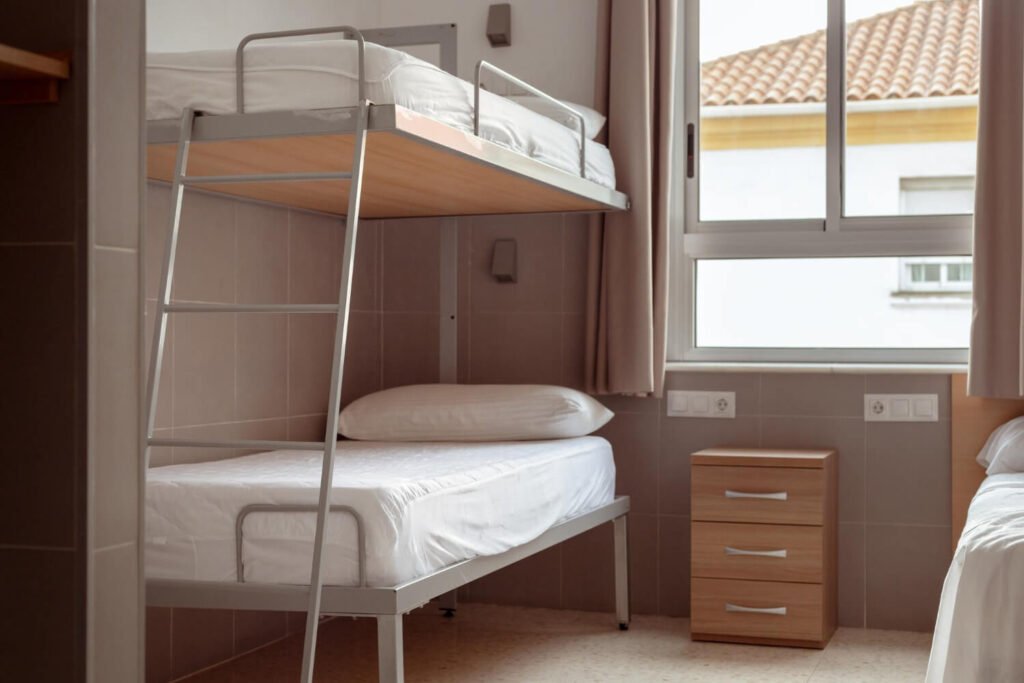
This makes it easier to assess conditions that may not be visible in promotional photographs, including cleanliness, odour, ventilation, occupancy density, storage practices, and bathroom conditions during periods of high usage.
Important areas to inspect include:
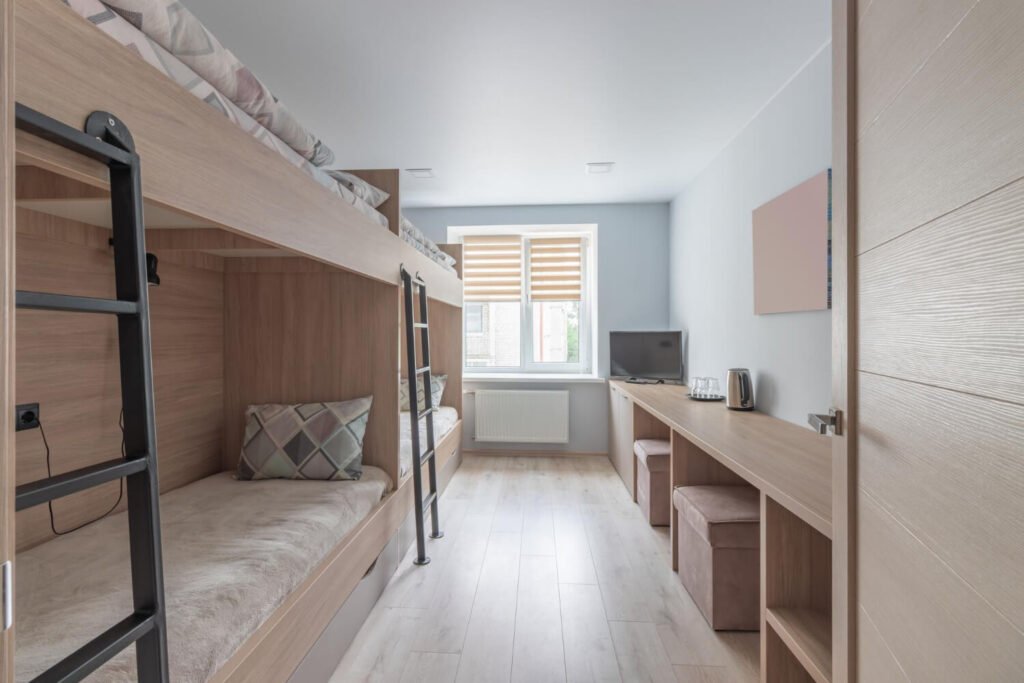
- The number of residents per room
- The distance between beds
- The number of toilets and bathrooms
- Ventilation systems
- Clothes-drying areas
- Cooking facilities
- Access control systems
- CCTV coverage
- Recreational or common areas
- Internet access
- The process for workers to report problems
Updated standards for new dormitory developments specify a minimum living space of 4.2 square metres per resident, a maximum of 12 residents per room, and a minimum distance of one metre between beds.
Additional ventilation and hygiene requirements may also apply.
However, these standards apply to new dormitory development applications submitted within the relevant implementation periods. Employers should not assume that every existing dormitory is required to follow exactly the same physical configuration.
The Singapore Civil Defence Force, or SCDF, also establishes specific fire safety requirements for worker sleeping quarters. These requirements may cover room size, occupancy calculations, fire-resistant walls and doors, escape routes, and smoke ventilation in corridors.
Fire safety occupancy calculations should not be treated as a substitute for employee welfare standards.
For example, the number of residents a building can legally accommodate based on emergency evacuation calculations does not mean that an employer should fill the building to its maximum capacity without considering living space, hygiene, and overall comfort.
What Should Be Included in a Worker Dormitory Rental Agreement?
MOM recommends that employers enter into a written rental agreement with the dormitory operator and provide workers with a channel for reporting accommodation-related problems.
This allows the employer and the accommodation provider to work together to resolve issues effectively.
The rental agreement should clearly state:
- The number of beds
- The rental period
- The commencement and expiry dates
- Renewal conditions
- The security deposit
- Additional charges
- Responsibility for property damage
- Procedures for increasing or reducing the number of beds
One issue that is often overlooked is the termination clause.
If a project is delayed, workers are not approved to enter Singapore, or the company needs to relocate to another worksite, a contract that does not allow the employer to adjust the number of beds may result in several months of unnecessary rental expenses.
Before signing the agreement, employers should verify that the company named in the contract is the same entity that holds the relevant licence or has the legal authority to rent out the accommodation.
Employers should also request a receipt or other proof of payment for every transaction.
What Type of Worker Dormitory Rental Should Employers Choose?
A suitable worker dormitory rental should meet three requirements at the same time:
- It must be legally compliant.
- It must support the company’s operational needs.
- It must provide an appropriate living environment for workers.
Employers should begin by assessing the number of workers, their Work Pass categories, the duration of the project, and the workplace location.
They can then compare accommodation types, locations, total rental costs, transportation expenses, licences, and contract conditions before conducting an on-site inspection and speaking directly with the dormitory management team.
Choosing accommodation carefully may not result in the lowest possible rental price per bed.
However, it can reduce legal risks, prevent workforce management problems, and provide employees with a suitable environment in which to rest and recover. In the long term, this can also have a positive effect on employee well-being and work performance.
Q&A: Frequently Asked Questions About Worker Dormitory Rental
1. Is an employer responsible for paying workers’ accommodation costs?
Responsibility for accommodation expenses depends on the type of Work Pass, the employment agreement, and the applicable regulatory requirements.
However, MOM requires employers to ensure that their workers have suitable accommodation and that rent is paid on time.
2. Does a dormitory accommodating seven workers require a licence?
An operator managing accommodation for seven or more foreign employees is generally required to apply for a FEDA licence before commencing operations.
However, certain types of accommodation may be exempted if they meet the conditions specified under the applicable regulations.
3. Can an employer rent an ordinary residential property for foreign workers?
This may be possible only when both the workers and the property meet the relevant requirements.
These may include HDB or private residential property regulations, maximum occupancy limits, and Work Pass eligibility conditions.
Employers should verify the accommodation rights and restrictions that apply to each category of worker before signing a tenancy agreement.
4. Should employers reserve dormitory accommodation before workers travel to Singapore?
For certain new workers in the CMP sectors, employers must provide acceptable proof of accommodation before bringing them into Singapore.
Employers should therefore prepare a tenancy agreement, accommodation contract, or confirmed bed reservation in advance.
5. Is a long-term or short-term dormitory rental agreement better?
A long-term agreement may offer a better rental rate and help the employer secure the required number of beds.
A short-term agreement provides greater flexibility and may be more suitable for projects where workforce numbers change frequently.
The most appropriate option should be selected based on the duration of the project and the level of certainty surrounding workforce requirements.