
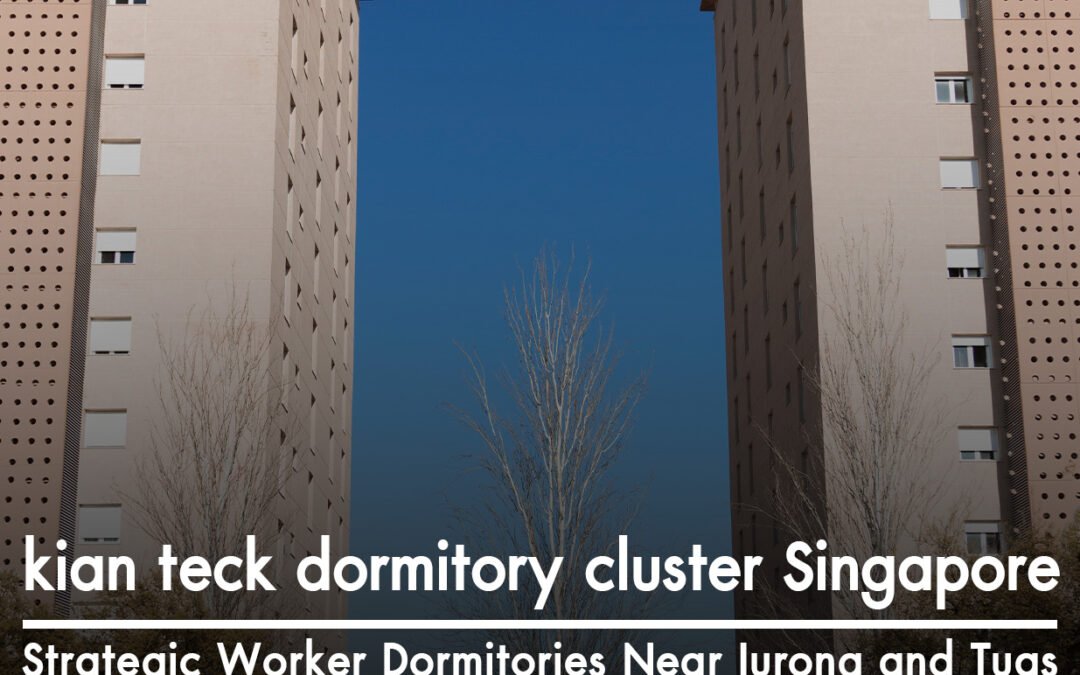
In an era where Singapore’s manufacturing and logistics industries continue to expand, worker accommodation is no longer merely supporting infrastructure for foreign labor. Instead, it has become a strategic factor that directly impacts productivity, safety, and employers’ legal compliance. As a result, the kian teck dormitory cluster has attracted increasing attention as a centralized hub for worker dormitories that systematically connects industrial locations with workers’ quality of life.
Singapore relies significantly on foreign labor in the manufacturing, construction, and logistics sectors. Consequently, the government places strong emphasis on allocating Worker Dormitories in appropriate locations to reduce the impact on urban communities and enhance workforce management efficiency. The kian teck dormitory cluster was developed specifically to meet these objectives, with urban planning that integrates worker housing with industrial infrastructure, transportation networks, and essential welfare facilities.
Why Kian Teck Is a Strategic Location for Worker Dormitories in Singapore
The kian teck dormitory cluster was developed under a concept that prioritizes worker accommodation near Singapore’s major industrial zones, particularly Jurong and Tuas, which are the core areas for manufacturing, logistics, and warehousing. Centralizing Worker Dormitories in this area helps maintain an orderly labor system, reduces pressure on urban housing, and improves national-level workforce management efficiency.
Policy guidance from Singapore’s Ministry of Manpower (MOM) clearly states that developing dormitories close to industrial areas is a key approach to “reducing travel time, enhancing safety, and improving the quality of life for foreign workers.” This aligns directly with the design of the kian teck dormitory cluster, which is planned to accommodate large numbers of workers without disrupting urban communities.
A qualitative example is Avery Dormitory, located in this area and operated in accordance with government standards for safety, hygiene, and systematic workforce management. As a result, the Kian Teck area has become one of Singapore’s long-term strategic locations for worker accommodation.
Advantages of Living Near the Jurong Industrial Area
Residing in a Worker Dormitory within the kian teck dormitory cluster, close to the Jurong industrial zone, significantly reduces commuting burdens for workers. Urban industrial labor studies indicate that shorter distances between accommodation and workplaces help reduce fatigue, increase punctuality, and lower the risk of commuting-related accidents.
The International Labour Organization (ILO) notes that “the quality of worker housing and proximity to workplaces have a direct impact on productivity and worker well-being.” This underscores that designing Worker Dormitories in industrial areas is not merely a matter of convenience, but a strategic workforce consideration.
In addition, the surrounding area of the kian teck dormitory cluster is supported by comprehensive infrastructure, including transportation systems, food outlets, healthcare centers, and recreational spaces. This aligns with Singapore’s post-COVID policy direction toward “Well-being Oriented Dormitories,” aimed at sustainably improving workers’ quality of life.
Why Employers Choose Worker Dormitories in the Kian kian teck dormitory cluster
From an employer’s perspective, the kian teck dormitory cluster offers a location that reduces workforce management costs across multiple dimensions—transportation expenses, lost time from long commutes, and legal risks. Selecting licensed Worker Dormitories within government-regulated zones enables employers to comply fully with MOM regulations.
According to Singapore’s Employer Guidelines, employers who provide accommodation that meets government standards face fewer labor relations risks and can manage foreign workers with greater stability. This is a key reason why many organizations choose dormitories within the kian teck dormitory cluster.
Professionally managed facilities such as Avery Dormitory further assure employers that workers receive appropriate care in terms of hygiene, safety, and basic welfare. This positively affects worker retention rates and overall operational efficiency.
Key Factors Employers Should Consider When Selecting a Worker Dormitory
Choosing a Worker Dormitory should not be based on price alone. Employers must also consider location, standards, and legal compliance—especially within the kian teck dormitory cluster, where multiple options are available. Employers should verify that a dormitory is properly licensed, equipped with safety systems, and subject to regular hygiene inspections.
Key factors to consider:
- Distance from the workplace
- Safety and sanitation standards
- Capacity for long-term workforce accommodation
- Reliability and credibility of the dormitory operator
Reports on Singapore’s Workforce Housing indicate that systematically managed dormitories aligned with government standards significantly reduce worker complaints and legal risks. This makes selecting a Worker Dormitory in the kian teck dormitory cluster a strategic decision rather than a short-term fix.
Conclusion
From both worker and employer perspectives, the kian teck dormitory cluster is more than a concentration of accommodations—it represents a comprehensive labor management ecosystem aligned with government policy and international standards. Choosing a Worker Dormitory in this area reduces legal risks, improves workers’ quality of life, and supports sustainable operational efficiency.
When considered alongside professionally managed examples such as Avery Dormitory, it becomes clear that selecting the right worker accommodation is a strategic investment, not merely a temporary solution.
References
- Ministry of Manpower (MOM) – Foreign Worker Housing
https://www.mom.gov.sg/passes-and-permits/work-permit-for-foreign-worker/housing - Ministry of National Development (MND) – Foreign Worker Housing Policy
https://www.mnd.gov.sg/what-we-do/our-work/foreign-worker-housing - Urban Redevelopment Authority (URA) – Singapore Master Plan & Industrial Zones
https://www.ura.gov.sg/Corporate/Planning/Master-Plan - JTC Corporation – Jurong Industrial Estate Information
https://www.jtc.gov.sg/industrial-land-and-space/industrial-estates/jurong - International Labour Organization (ILO) – Labour Migration & Worker Living Conditions
https://www.ilo.org/global/topics/labour-migration