
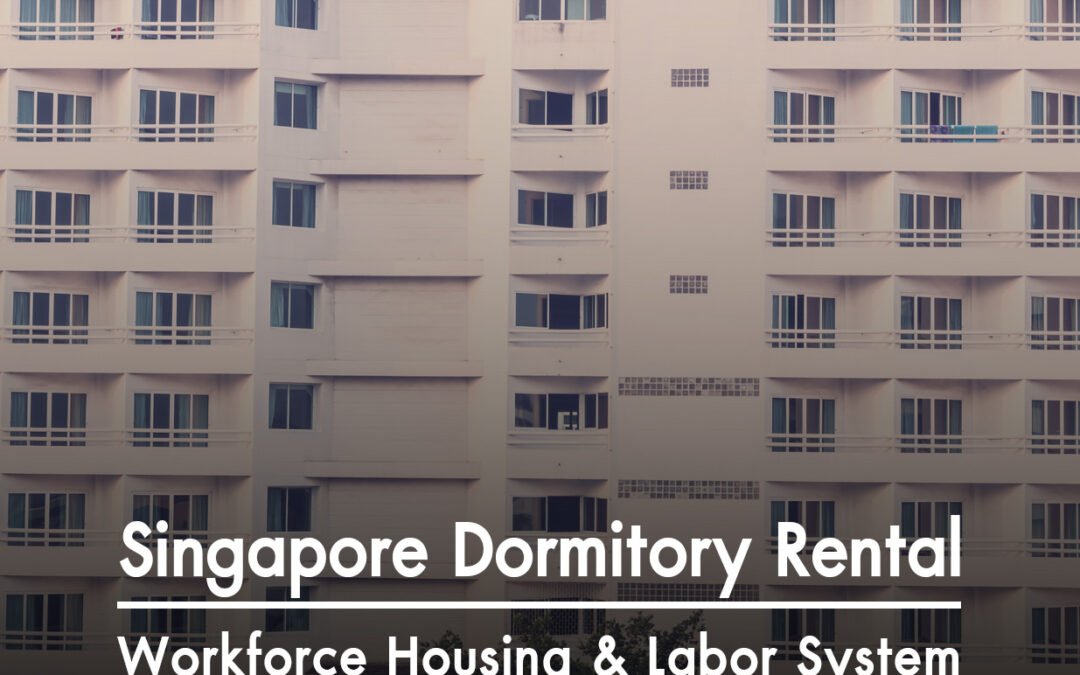
In countries with severe land constraints and strict labor regulations such as Singapore, worker accommodation is not merely a welfare provision. It is a critical component of the national economic system and a foundation for sustainable business operations. Singapore dormitory rental has therefore evolved beyond conventional housing into a nationally structured workforce support system.
Singapore is widely recognized as one of the most systematically managed labor markets in the world. Given its limited land availability and high-density urban structure, the government has developed the Singapore dormitory rental system to accommodate large numbers of workers under clearly defined standards and effective regulatory oversight.
Within this framework, Worker Dormitory facilities serve a role far beyond basic accommodation. They function as mechanisms for safeguarding workers’ quality of life, reducing social risks, and supporting long-term business operations. This article systematically explains these roles, supported by credible institutional data.
Singapore’s Labor System and the Necessity of Singapore Dormitory Rental
Singapore relies heavily on foreign workers across construction, manufacturing, and service sectors. Managing such a large workforce would be unsustainable without purpose-built housing infrastructure. As a result, Singapore dormitory rental has been elevated from “worker housing” to a core component of national labor infrastructure.
Urban labor and housing studies in high-density cities state that: “Systematic worker housing enables governments to effectively control safety standards, hygiene, and living conditions.”
In this context, Worker Dormitory facilities act as essential instruments for continuous labor oversight while reducing risks associated with the dispersion of workers across private residential housing.
Worker Accommodation as Labor Infrastructure
Worker dormitories in Singapore are not designed as conventional residential properties. They form part of a national labor infrastructure with clearly defined standards for space allocation, safety, utilities, and centralized management. Research on Institutional Housing indicates that centralized worker accommodation reduces regulatory costs and enhances long-term compliance with labor standards.
Overall, Singapore dormitory rental functions as a structural link between the government, employers, and workers through clearly organized accommodation systems, one of which is the Worker Dormitory model.
Stability of the Construction and Industrial Sectors and Worker Housing Systems
Singapore’s construction and industrial sectors depend on a continuous supply of labor. Housing instability can lead to absenteeism, workplace accidents, and project delays. Industrial labor reports emphasize that: “Workforce stability is directly correlated with the stability of the living environment.”
As a result, Singapore dormitory rental serves as a structural tool to ensure workforce continuity, particularly through large-scale Worker Dormitory facilities designed to accommodate high labor volumes in an orderly manner.
Worker Quality of Life and Housing Governance
Worker quality of life is a policy-level priority in Singapore. Research on workforce well-being consistently finds that: “Adequate living conditions have a direct impact on physical health, mental well-being, and work performance.”
Accordingly, Singapore dormitory rental regulations define minimum standards for living space, cleanliness, and safety to ensure overall worker well-being. These principles are implemented operationally within Worker Dormitory facilities.
Worker Accommodation Management and Employer Legal Risk
From an employer’s perspective, selecting a compliant Singapore dormitory rental solution significantly reduces legal risk. Worker accommodation obligations are closely monitored by regulatory authorities.
Singapore labor compliance documents state that:“Failure to comply with worker accommodation standards may result in legal penalties and reputational damage.”
Therefore, utilizing professionally managed Worker Dormitory facilities enables employers to maintain continuous compliance and mitigate regulatory exposure.
Lessons from National-Level Development of Singapore Dormitory Rental
Case studies from experienced operators such as Avery Dormitory demonstrate that structured worker housing management can elevate labor standards, reduce oversight burdens, and strengthen stability across both the private and public sectors.
Professional housing management frameworks emphasize that: “Well-designed worker accommodation is not a cost, but an investment in labor system stability.”
Conclusion
This analysis highlights that Singapore dormitory rental is a foundational element of Singapore’s labor system. Worker Dormitory facilities serve as structured links between the government, employers, and workers through standardized accommodation and professional management.
Choosing professionally managed worker dormitories not only improves worker quality of life but also reduces legal risk, ensures business continuity, and reflects corporate responsibility within Singapore’s highly regulated economic environment.
References
- Ministry of Manpower (MOM), Singapore
https://www.mom.gov.sg - Dormitory Standards & Regulations – Ministry of Manpower
https://www.mom.gov.sg/employment-practices/accommodation - Urban Redevelopment Authority (URA), Singapore
https://www.ura.gov.sg - International Labour Organization (ILO)
https://www.ilo.org - World Bank – Housing & Urban Development Research
https://www.worldbank.org/en/topic/urbandevelopment