
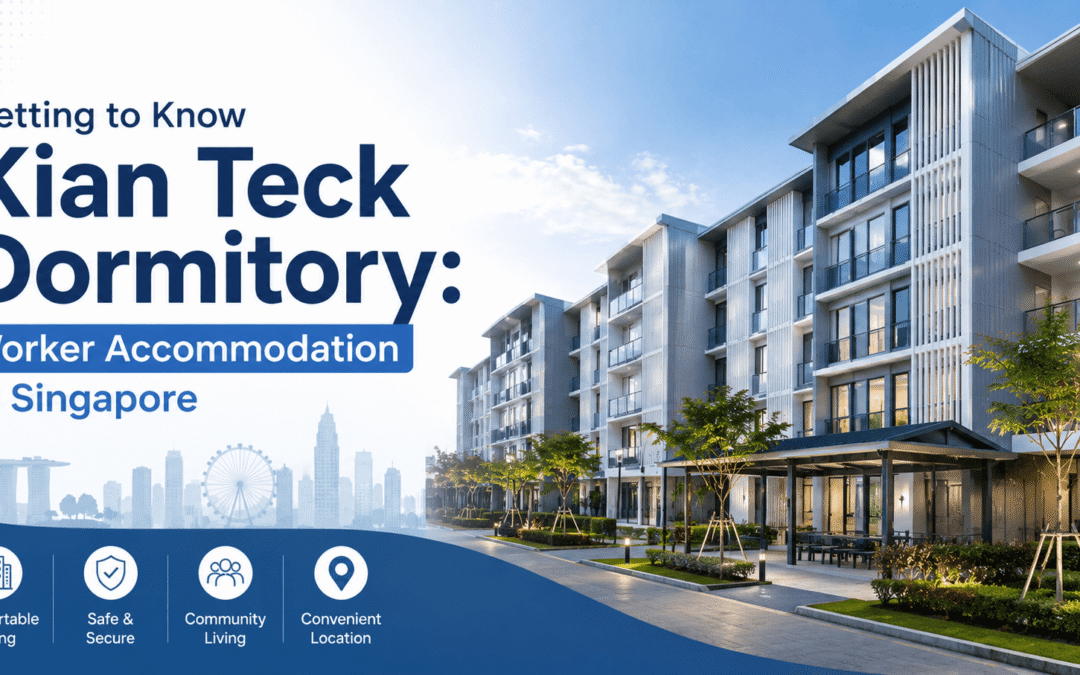
Choosing worker accommodation in Singapore is not simply about finding enough available beds for your employees. Employers also need to consider location, living conditions, compliance with Singapore regulations, dormitory management, and the everyday convenience and well-being of their workers.
For employers or businesses searching for Avery Key Dormitory, the accommodation you may actually be looking for is Kian Teck Dormitory, one of the worker dormitories managed by Avery Dormitories.
Kian Teck Dormitory is located at 26 Kian Teck Avenue, Singapore 628920. Avery presents the property as a spacious worker dormitory designed to provide residents with a comfortable, home-like living environment. Across its network, Avery Dormitories has an overall capacity of approximately 23,000 beds across four locations in Singapore, with an emphasis on systematic management and compliance with relevant accommodation standards.
So, what should employers know before choosing Kian Teck Dormitory, and is it suitable for the needs of both their workforce and business operations?
Is Avery Key Dormitory the Same as Kian Teck Dormitory?
If you are searching for “avery key dormitory,” the first thing to understand is the correct name of the accommodation.
According to information on the official Avery Dormitories website, the property is called Kian Teck Dormitory and is located at 26 Kian Teck Avenue, Singapore 628920.
Kian Teck Dormitory is part of the Avery Dormitories network, which includes:
- Avery Lodge — 2D Jalan Papan
- Kian Teck Dormitory — 26 Kian Teck Avenue
- Tampines Dormitory — 2 Tampines Place
- Woodlands Dormitory — 27 Woodlands Sector 1
Together, the Avery Dormitories network has a total capacity of approximately 23,000 beds.
The company places importance on several core principles, including thoughtful residential design, professional management, and residents’ quality of life. Avery also states that its facilities comply with applicable Foreign Employee Dormitories Act (FEDA) standards.
For employers, this is an important consideration. Worker accommodation should not be selected based solely on a name or a Google search result. Employers should verify the actual property, address, room or bed availability, licensing conditions, and suitability for their workforce before making a decision.
Why Is the Location of Kian Teck Dormitory Important for Businesses?
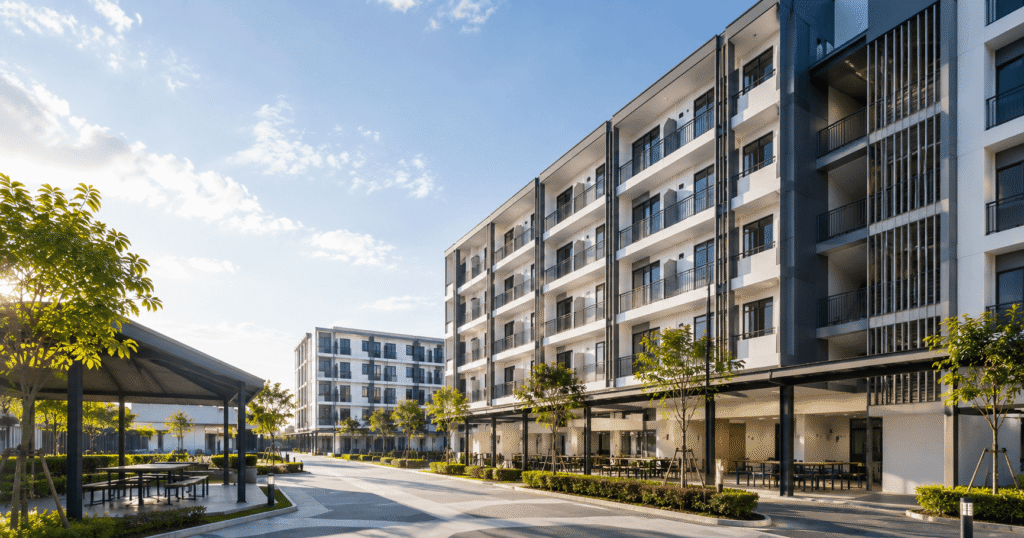
Location is one of the most important factors when choosing worker accommodation. Kian Teck Dormitory is situated along Kian Teck Avenue in western Singapore. For businesses whose employees work in industrial areas in the west, choosing accommodation in this area may make daily commuting more convenient than housing workers much farther away.
However, employers should consider more than just the distance shown on a map. What really matters is the actual daily commute.
Consider a hypothetical example.
Company A employs 80 workers who need to travel to an industrial area in western Singapore every morning.
Dormitory X may offer a lower accommodation rate per worker, but employees may need to spend considerably more time travelling by company shuttle. Kian Teck Dormitory, on the other hand, may be located closer to their workplace.
The employer should therefore compare the total operational cost, including:
Accommodation cost + transportation cost + commuting time + management convenience
A small difference in accommodation rates does not necessarily mean the business is saving money if it results in higher transportation expenses and additional time spent moving a large workforce every day.
For this reason, location should be considered part of the overall operating cost rather than simply a matter of convenience.
Why Is Compliance Important When Choosing a Worker Dormitory in Singapore?
Legal and regulatory compliance is one of the key differences between renting ordinary accommodation and arranging housing for foreign workers in Singapore.
Singapore’s Ministry of Manpower (MOM) states that dormitories accommodating seven or more foreign employees generally need to be licensed under the Foreign Employee Dormitories Act (FEDA) before they can begin operating and accepting residents, subject to the accommodation type and applicable legal exemptions.
MOM also outlines employers’ responsibilities for providing accommodation to foreign workers, including carrying out appropriate checks to ensure that the accommodation complies with relevant requirements.
Compliance, therefore, is not simply a matter of paperwork. It affects employers, dormitory operators, and, most importantly, the workers who actually live in these facilities.
Singapore is also continuing to raise worker accommodation standards through the Dormitory Transition Scheme (DTS). Existing dormitories that are not yet operating under the New Dormitory Standards generally need to meet transitional standards by 2030, subject to applicable conditions and exemptions, before progressing towards the New Dormitory Standards by 2040.
Key measures cover areas such as the number of residents per room, minimum living space, isolation facilities, and en-suite toilets.
For employers considering avery key dormitory or any other worker accommodation in Singapore, checking current standards and regulatory compliance should therefore be one of the first steps in the decision-making process.
What Should Employers Compare Before Choosing a Worker Dormitory?
A common mistake is to compare worker dormitories mainly by their price per bed. Price is certainly important, particularly for businesses arranging accommodation for a large workforce. However, the price per bed does not represent the full cost that a company may ultimately have to bear.
Consider these two approaches:
| Factor | Choosing Mainly by Price | Choosing Based on Practical Needs |
| Accommodation cost | Find the cheapest available bed | Consider value together with facilities |
| Location | Treated as a secondary factor | Compared directly with actual work locations |
| Compliance | Assumed to be handled by the operator | Verified before signing a contract |
| Facilities | Check whether they exist | Consider whether workers can realistically use them |
| Management | Often overlooked | Consider long-term management quality |
| Transportation | Calculated separately | Included in total accommodation costs |
| Quality of life | Treated as secondary | Considered alongside business operations |
This does not mean businesses should ignore price. Instead, employers should recognise that “the cheapest bed” does not always mean “the lowest total cost.”
Accommodation that fits the company’s actual operations may help reduce transportation complexity, management burdens, and everyday residential issues.
Why Does the “Comfort of Home” Matter in Worker Accommodation?
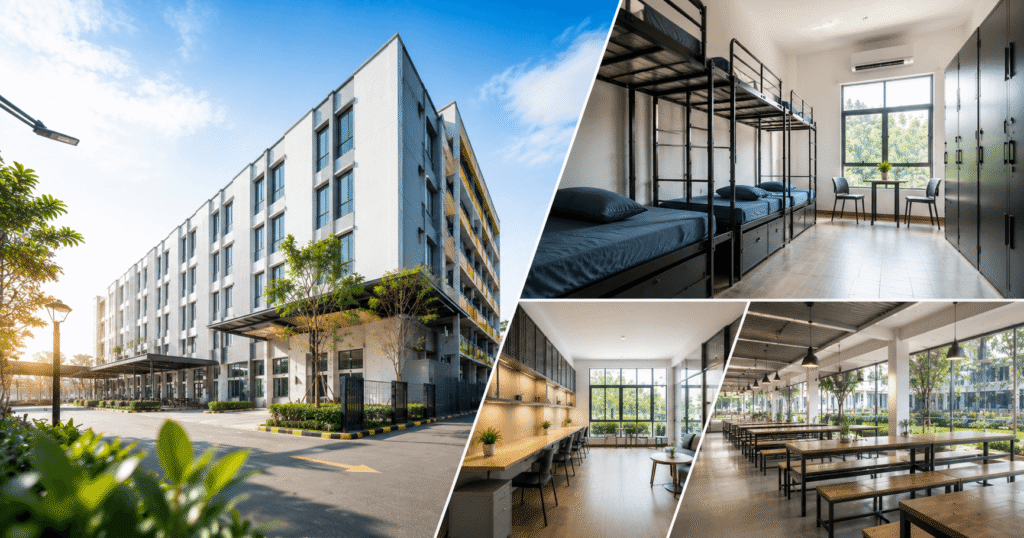
Avery describes Kian Teck Dormitory as a spacious dormitory intended to provide workers with the comfort of home.
This concept matters more than many businesses may initially realise.
For foreign workers who spend extended periods away from their families and home countries, a dormitory is not simply a place to sleep after work. It becomes an important part of their everyday lives.
This is one reason why MOM’s description of Purpose-Built Dormitories (PBDs) extends beyond bedrooms. Such accommodation may include facilities and services such as minimarts, cooking areas, laundry services, remittance services, and recreational facilities such as gyms and outdoor sports areas.
Consider two workers returning to their accommodation after a full day at work.
The first returns to a dormitory where daily necessities and suitable communal spaces are easily accessible. The second needs to travel a considerable distance just to purchase basic items or has almost no usable space beyond the sleeping area.
Both accommodations may provide a “bed,” but the overall living experience can be very different.
This is why evaluating worker accommodation should involve looking at both the room itself and the wider living environment.
Are Large Dormitories Always Better Than Smaller Accommodation Options?
Not necessarily.
This is another important consideration when evaluating avery key dormitory or any other large-scale worker accommodation.
A professionally managed large dormitory may offer advantages in terms of bed capacity, management systems, and facilities designed specifically for foreign workers.
However, for companies employing only a small number of workers, or whose employees work far from major dormitory locations, another compliant accommodation type may be more suitable.
Singapore permits several types of accommodation for foreign workers, each of which may be subject to different requirements. There is therefore no universal rule that says “the largest dormitory is always the best.”
A more useful question is:
Which accommodation option offers the best balance of standards, location, bed capacity, management, facilities, and suitability for the company’s workforce?
For companies employing dozens or hundreds of workers, accommodation managed by a professional dormitory operator may offer advantages in scale and administration. For smaller workforces, however, other compliant accommodation options may also be worth comparing.
How Is Singapore Raising Worker Dormitory Standards?
Singapore’s evolving regulatory environment is another factor employers should consider when planning worker accommodation over the long term.
In January 2026, Singapore’s Ministry of Manpower announced additional support measures for existing dormitories transitioning towards higher accommodation standards.
According to MOM, key improvements under the Dormitory Transition Scheme for dormitories subject to these requirements include a maximum of 12 residents per room, at least 3.6 square metres of living space per resident, en-suite toilets, and isolation spaces.
MOM information published in May 2026 also indicated that Singapore had approximately 1,600 FEDA-licensed dormitories.
Around 30% were already operating under the New Dormitory Standards and accommodated no more than 12 residents per room. Approximately 70% were existing dormitories, generally accommodating around 12–16 residents per room.
These developments show that Singapore’s worker accommodation standards continue to evolve.
For employers, this means the question should not simply be whether beds are available today. Businesses should also consider an accommodation provider’s current standards and preparedness for changing regulatory requirements.
Why Is Avery Dormitories an Option Worth Considering?
Avery Dormitories is a worker accommodation provider in Singapore whose operations cover areas ranging from dormitory development to day-to-day property management.
Its current network, as listed on the company’s website, comprises four locations with a combined capacity of approximately 23,000 beds.
- Avery Lodge provides living and dining areas, kitchen spaces, amenities, and recreational facilities.
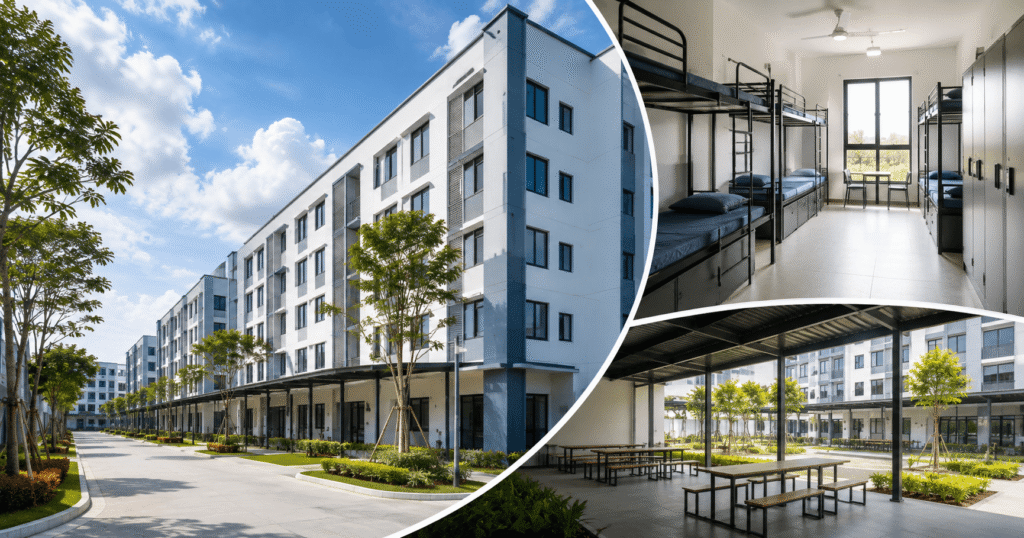
- Kian Teck Dormitory, which may be the property people searching for “avery key dormitory” are trying to find, is located at 26 Kian Teck Avenue. It is presented as a spacious dormitory designed around the idea of providing workers with the comfort of home.
- Tampines Dormitory is located near the Tampines and Changi industrial areas, making it potentially suitable for workers employed in nearby industries.
- Woodlands Dormitory is situated in the Woodlands industrial area, making it relevant to workers in manufacturing, furniture, food-related businesses, and other industries operating nearby.
Having multiple locations gives employers more flexibility when matching accommodation with the workplaces of different employee groups.
Before making a final decision, however, employers should contact Avery Dormitories directly to confirm current room or bed availability, room configurations, pricing, contract terms, and up-to-date compliance information.
Is Avery Key Dormitory Worth Considering?
For employers and companies searching for “avery key dormitory,” the accommodation worth considering is Kian Teck Dormitory by Avery Dormitories, particularly for businesses whose workers are based in western Singapore.
However, the value of worker accommodation should not be assessed solely by the number of beds available or the accommodation rate.
Employers should consider location, management quality, compliance, workers’ quality of life, transportation expenses, and total operating costs together.
The Avery Dormitories network, with a combined capacity of approximately 23,000 beds across Kian Teck, Jalan Papan, Tampines, and Woodlands, also provides businesses with more options when their employees are distributed across different parts of Singapore.
Ultimately, good worker accommodation should achieve two goals at the same time: it should help businesses manage their workforce efficiently while providing workers with a safe, appropriate, and professionally managed living environment.
Employers interested in Kian Teck Dormitory or other properties within the Avery network can check further details and make enquiries through the official Avery Dormitories website.